


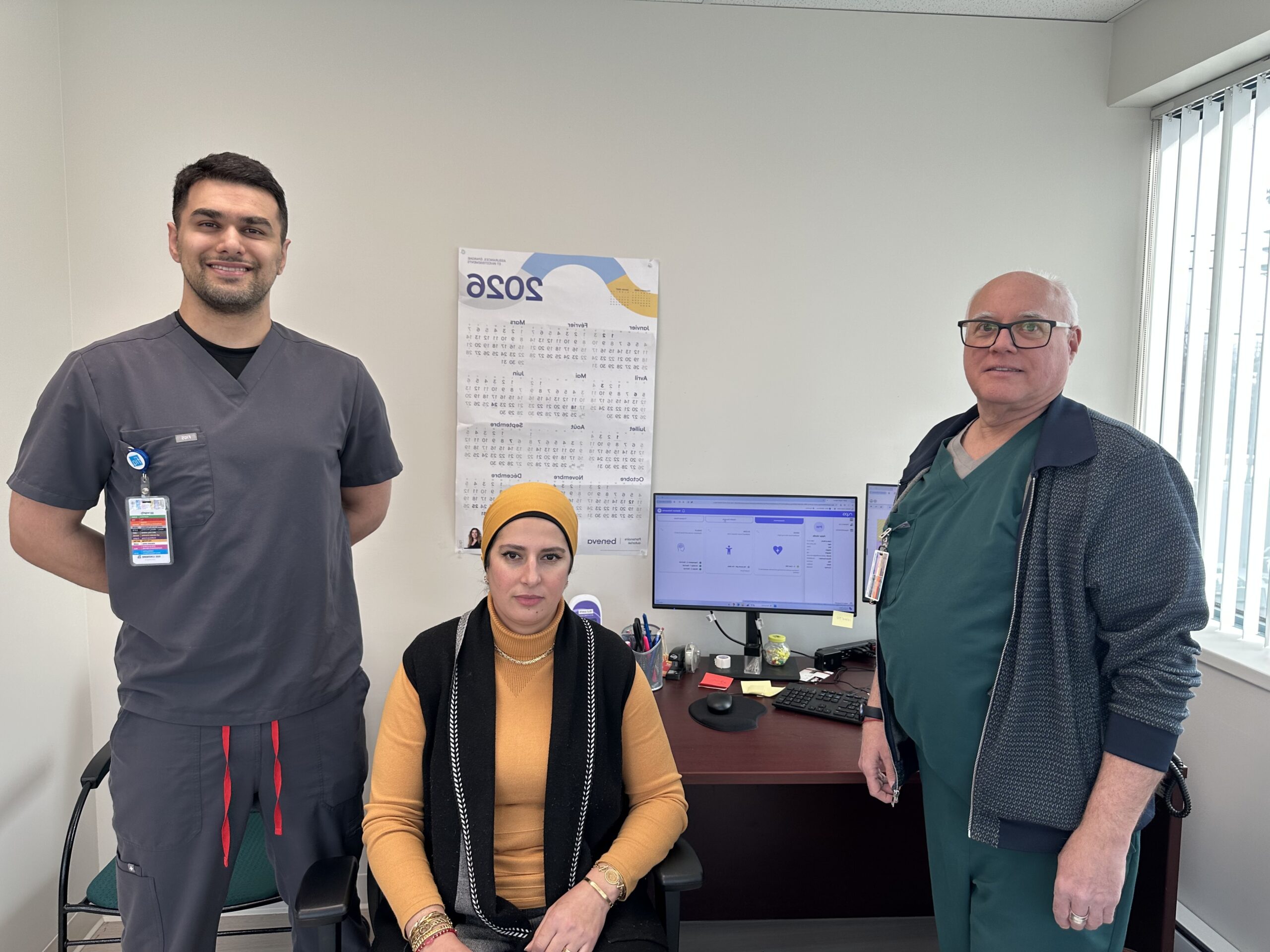

CIUSSS de l’Ouest-de-l’Île-de-Montréal launched this project in November 2024 to improve care for people who don’t have a family doctor but are registered with a primary care access point—particularly for patients with chronic illnesses that require regular follow-ups. More than 54,000 people in the area are waiting for a family doctor, and the high prevalence of type 2 diabetes (12.2%) and cardiovascular risk (25.8%) made a new approach necessary.
The project is based on a preventive care station combined with structured referral trajectories. This station includes a vital signs monitor and a nursing station. During the onboarding process, the nurse meets the patient, helps them use a mobile app and provides them with a smart watch. These tools measure several biological parameters and transmit data securely. The patient is an active partner.
Data is centralized in a dashboard shared with the nurse. An automated alert system makes it possible to quickly identify high-risk situations and take proactive action by providing advice, education about self-management or appropriate referrals. A total of 691 patients were contacted between March 21 and December 31, 2025. Of these, 232 were added to the program, generating 243 processed alerts and 212 follow-up meetings. In addition, 227 people have onboarding appointments scheduled. Only three users were seen at the university family medicine group, none of whom needed referral to hospital emergency services.
Lead:
Saadia Marfouk, Director, Vaccination, Screening, Public Health and Population Responsibility, CIUSSS ODIM
Contributors:
Peter-William Wolfe, Nurse
Aazmaray Gul, Nurse Clinician
Khadija Sabtaoui, Nurse


