


Children suffering from severe traumatic brain injury (TBI) must be operated on quickly to evacuate bleeding that can result in brain compression. This is a life-threatening emergency. Although our performance in the 2016–2022 provincial assessment was average among trauma centres, we were aware that equipment issues with critical patients caused additional delays.
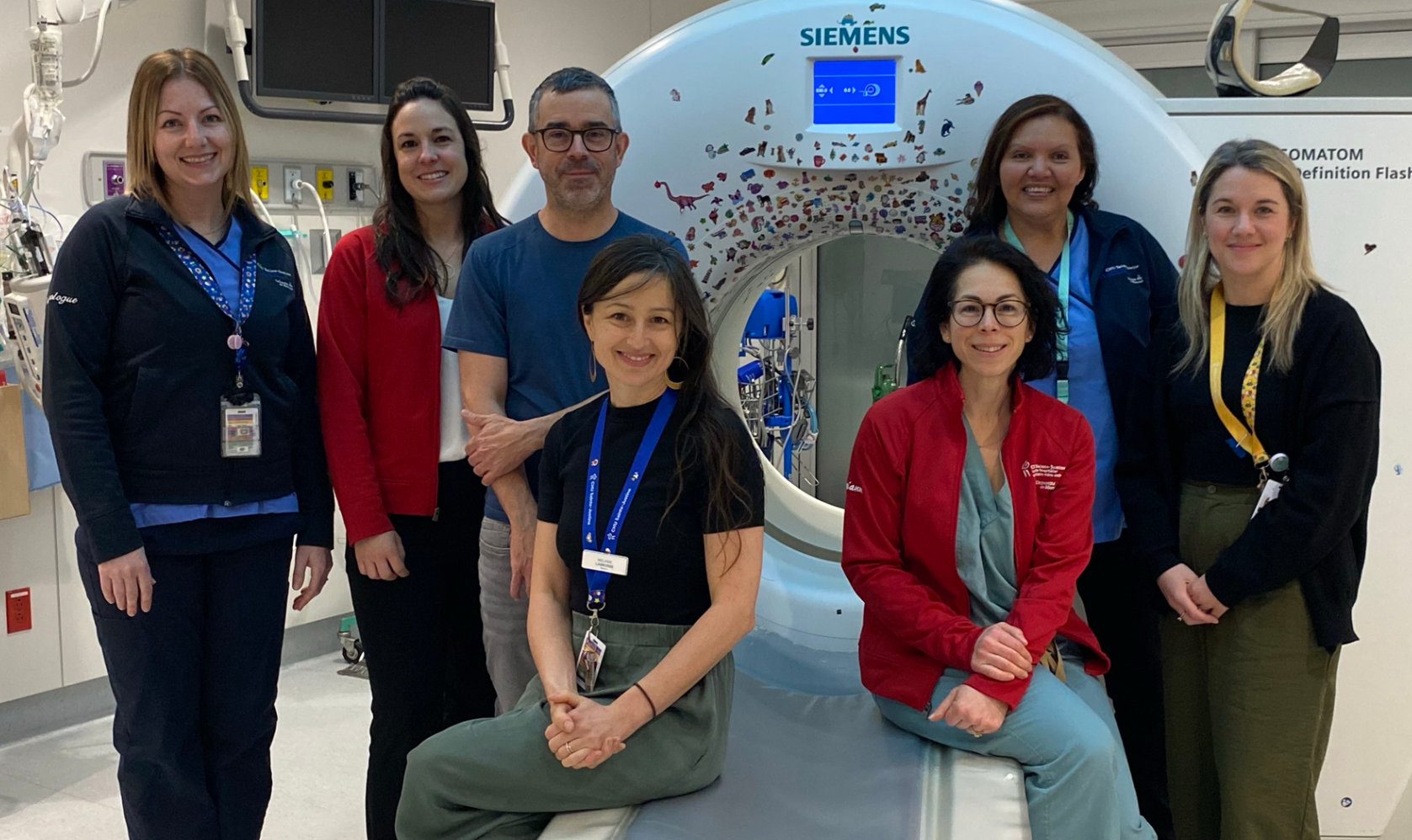
A multidisciplinary group (emergency, radiology, respiratory therapy and trauma) was set up to identify obstacles. Four simulations, combined with reviews of real-life cases, helped standardize the procedure and equipment positioning to speed up access to the operating room. To support the implementation, we created an illustrated procedure, simulations and a video to train staff. The CAT technologist’s leadership was reinforced to coordinate equipment positions and ensure protocol compliance.
We conducted an audit to measure the impact of these interventions. For the most critical patients, the median time from CAT arrival to departure was reduced by 50% (from 70 to 35 minutes) and set-up time dropped by 77% (from 31 to 7 minutes). For all patients audited, the time between arrival in the CAT room and departure decreased by 35% (from 40 minutes to 26 minutes). This procedure has since been used for all CAT scans at CHU Sainte-Justine, and the improvements made to the trauma stretcher in the emergency department have been applied to all stretchers in the recovery room.
Lead:
Marie-Gabrielle Delisle, Nurse Clinician, Assistant Head Nurse, Trauma Trajectory
Contributors:
Véronique Meilleur, Specialist Technician, Scan
Marie-Gabrielle Delisle, Assistant Head Nurse, Trauma Trajectory
Sylvain Morneau, Assistant Chief Professional, Respiratory Therapy
Mélanie Labrosse, Emergency Pediatrician, Emergency Room Trauma Head
Marianne Beaudin, Pediatric Surgeon, Trauma Department Head
Claudia Suarez, Scan Technical Coordinator
Virginie Raymond, Nursing Advisor, Emergency


